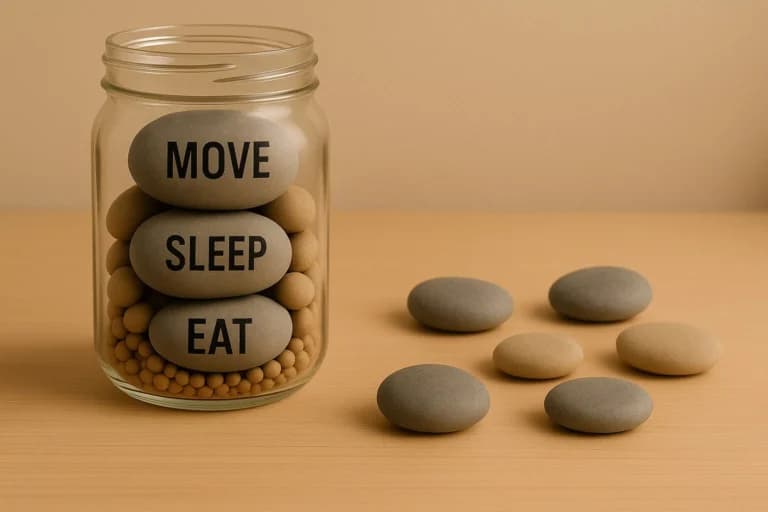
The Big, Medium, and Small Rocks of a Healthy Lifestyle
Prioritizing "big rocks" in health prevents becoming overwhelmed by countless wellness trends. This article uses a jar-filling metaphor to illustrate the importance of sequencing health priorities.
The Big Rocks: The Foundations Everyone Needs
These fundamentals form the core of healthy living and represent outcome goals with flexible implementation methods:
Move as much as possible
Emphasizes that "Something is always better than nothing," recommending 150 minutes moderate-intensity movement weekly spread over multiple days.
Strength train
Two full-body sessions weekly, noting strength training supports muscle maintenance, metabolism, and joint health.
Eat 3–6 balanced meals per day
Each meal should contain protein, fiber, and fruits/vegetables using the Vineyard GLP-1 Plate Method.
Get adequate sleep
Most people need 7–9 hours nightly with consistent schedules supporting circadian rhythms.
Manage stress levels
Uses the 4 A's framework: Avoid unnecessary stress, Alter situations, Accept unchangeable circumstances, Adapt mindset.
Build and maintain community
Emphasizes social connection's role in emotional resilience and well-being.
Engage in joyful activities
Identifies pleasure and joy as health necessities rather than luxuries.
Stay hydrated
Describes water as "essential for virtually every bodily function."
Reduce or eliminate alcohol and cigarettes
Links these substances to cancer and cardiovascular disease risks.
The Medium Rocks: Useful, but Not Essential for Everyone
Medium Rocks represent optional refinements after establishing Big Rock consistency, suited for those with sufficient motivation and bandwidth:
- Tracking calories and macros
- Weighing and measuring food portions
- Structured strength training programs (3–4+ sessions weekly)
- Increasing movement to 300 minutes moderate-intensity weekly
- Meal timing strategies like intermittent fasting
- Reducing ultra-processed foods
The Small Rocks: The Extras That Might (or Might Not) Help
Small Rocks are details receiving disproportionate attention despite minimal impact on overall health outcomes:
- Supplements
- Specialized GLP-1 food products
- "Clean," "organic," or "fresh" foods
- Fancy workout equipment
- Hyper-specific training plans
- Elaborate morning routines
Don't let them distract you from the fundamentals!
Final Thoughts
Sustainable health prioritizes consistency over perfection. Start small while maintaining focus on foundational practices.
Related Articles
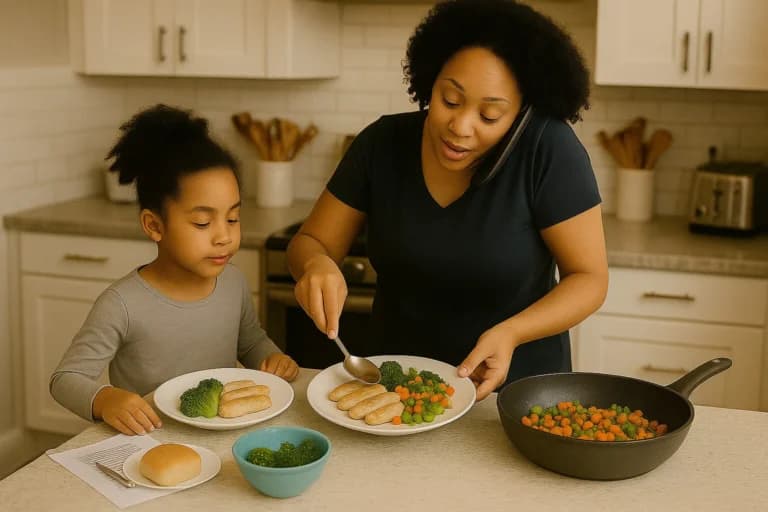
Healthy Eating for Busy Parents: Practical Tips for Real Life
Between work deadlines, school pickups, and extracurricular activities, maintaining healthy eating habits as a busy parent can be especially difficult.

How-To Guide: Using AI to Simplify Meal Planning
Meal planning sounds great in theory, but putting it into practice can quickly become overwhelming.

Understanding Your DXA Scan
Your DXA scan gives you valuable information about your body that you can use to improve your health.